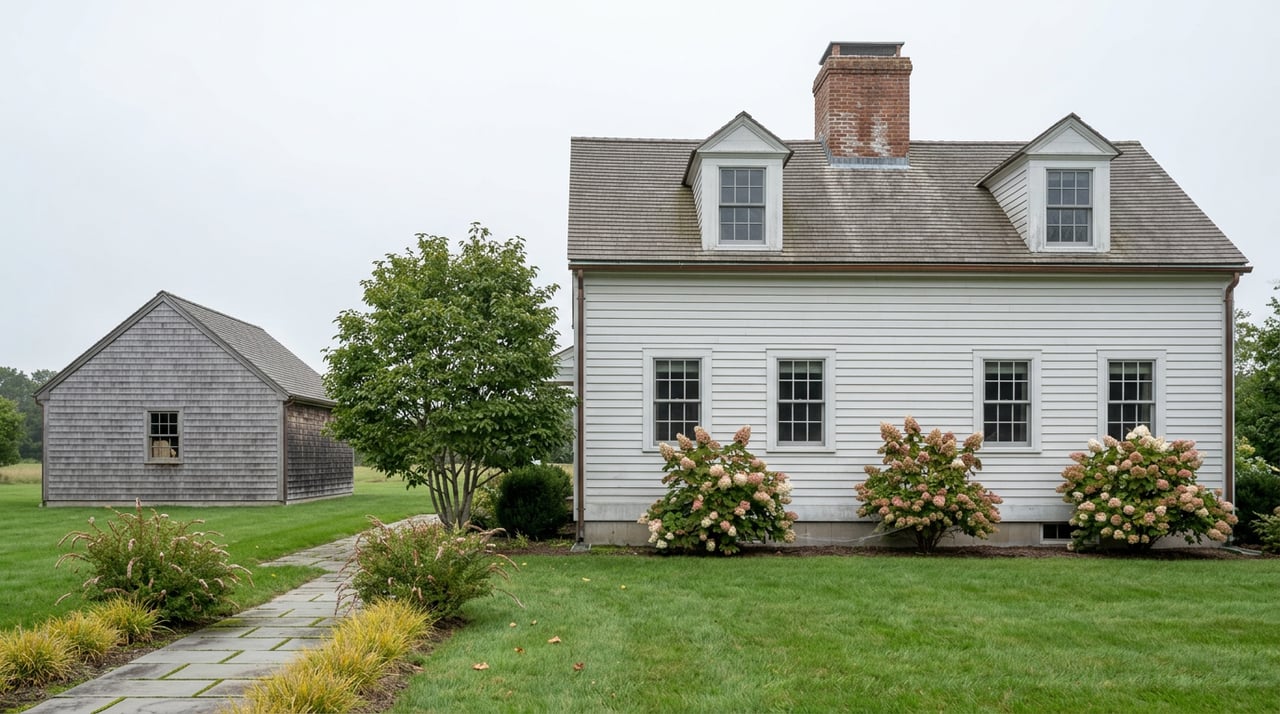
The Three-Unit Rule That Doesn't Reach Kennebunk's Waterfront Lots
August 27, 2026
August 27, 2026
Maine changed the math on what a single-family lot can hold almost a year ago. Since September 24, 2025, state law has required most towns to allow at least three dwelling units on any residential lot, four if the lot sits in a designated growth area or has town water and sewer. No owner has to live on site. No Planning Board hearing is required for four units or fewer. It is, on paper, the biggest change to small-lot housing capacity Maine has made in decades.
Walk the shoreland along the Kennebunk River, the Mousam, or Kennebunk Beach, and almost none of that applies in practice yet. The same law that forces density everywhere else preserves the state's shoreland zoning standards, and Kennebunk's own ordinance still requires shoreland accessory dwelling units to clear separate space and bulk rules the rest of town doesn't face. The three-unit rule and the waterfront lot both exist in Kennebunk right now. They mostly don't overlap.
If you're pricing a property here this fall, whether you're buying, selling, or holding, that gap is the thing worth understanding before the comps make sense.
The current rule traces back to two bills. LD 2003, passed in 2022, first legalized one accessory dwelling unit by right on any lot with a single-family home. LD 1829, signed by the governor on June 20, 2025 and codified as PL 2025, chapter 385, went much further: at least three units per residential lot, four in growth areas or lots served by public water and sewer, no owner-occupancy requirement on either the main house or the added unit, and no Planning Board review triggered by a project of four units or fewer.
Towns that can amend their own zoning without a voter referendum had to comply by July 1, 2026. Towns governed by Town Meeting, which includes Kennebunk, have until July 1, 2027. That later deadline is why the town's Planning Board scheduled public hearings for August 2026, the fastest path to getting the required amendments onto the November 2026 Town Meeting warrant, according to a staff memo Kennebunk's Community Development Department prepared for the board.
Until that vote happens, the town's written zoning ordinance still says what it has said for years: one accessory apartment per lot, capped at 1,000 square feet under Article 10 of the current code, with one of the two units required to be owner-occupied and short-term rental use prohibited outright. State law already overrides parts of that language. The local code just hasn't caught up in writing, which means a buyer relying on what a listing sheet or a seller's agent says about a lot's "allowed use" could be working from a page that's a year out of date.
Here's where the story splits by geography. LD 1829 requires shoreland accessory dwelling units to meet the space and bulk standards set by the Maine Department of Environmental Protection and by local shoreland ordinances, and it stops short of forcing towns to treat waterfront lots the same as everywhere else. A municipality can't ban a shoreland ADU outright if it meets those DEP standards, but "meets those standards" is doing a lot of work on lots that were platted decades before anyone wrote a shoreland ordinance.
Kennebunk's own rule requires shoreland ADUs to separately satisfy the shoreland zone's space and bulk requirements on top of the base ADU rules. Next door in Kennebunkport, the same logic gets even stricter: an ADU in the shoreland zone isn't permitted at all unless the lot is double the standard lot size for its zone, double the minimum lot size, and double the required shore frontage, according to the town's published accessory dwelling unit standards. Almost no existing waterfront parcel in either town was subdivided with double frontage in mind. The rule isn't a ban. It functions like one for the overwhelming majority of lots it touches.
The practical result: a three-or-four-unit lot in West Kennebunk or a non-shoreland pocket of the Village looks nothing like a three-or-four-unit lot along the river or the beach. One is opening up. The other is holding roughly still.
| Non-shoreland residential lot | Shoreland zone lot | |
|---|---|---|
| Units allowed by right (state minimum) | 3, or 4 in a growth area with water/sewer | Same floor applies, but subject to shoreland dimensional rules first |
| Owner-occupancy required | No, under state law | Local shoreland standards can still apply on top |
| Planning Board review | Not required for 4 units or fewer | Same exemption, if shoreland dimensional thresholds are met |
| Realistic outcome on most existing lots | Genuine added-unit potential | Space and bulk math rarely clears the bar |
Kennebunk's own comprehensive plan gives away where this pressure was already building before LD 1829 existed. The town's housing chapter notes that Kennebunk has more than a thousand homes built before 1939, many of them large by the standards of their era, and that some have already been informally converted to multi-family use or accessory apartments outside the town's Historic District Overlay. The plan calls this an existing pattern with room to grow, not a hypothetical.
Put that together with the shoreland split and the shape of the next few years gets easier to read. The added-unit and small-multifamily conversion activity that LD 1829 is designed to unlock will concentrate in the older, larger homes on non-shoreland lots in and around the Village, the Landing, and West Kennebunk, the exact housing stock the town already flagged as ripe for conversion. Waterfront acreage along the river and the beach stays governed by dimensional math that most existing lots can't satisfy, regardless of what the state floor says is technically allowed.
For a buyer weighing a waterfront property against something a few blocks inland, the shoreland carve-out is a form of protection you're not paying extra for on the listing sheet. A neighboring shoreland lot is far less likely to add a second or third structure than a comparable inland lot, simply because the dimensional math rarely clears.
For an owner of an older, larger home outside the shoreland zone, particularly one built before 1939 and outside the Historic District Overlay, the value of the lot itself may be shifting ahead of any renovation. Once Kennebunk's ordinance catches up to state law, likely sometime between the November 2026 vote and the July 2027 deadline, added-unit potential on that kind of parcel becomes a real, disclosed feature rather than a workaround.
For an investor or rental host evaluating where a second unit pencils out, the geography matters more than the price per square foot. A shoreland lot that looks like a natural candidate for a guest cottage may not clear the doubled dimensional thresholds. A less scenic inland lot with an older, oversized house may already qualify, or will once the local ordinance is amended to match state law.
None of this is legal advice, and zoning determinations are parcel-specific. Before writing an offer around added-unit potential, confirm the lot's shoreland status and current permitted use with Kennebunk's Community Development Department directly, since the ordinance itself is mid-revision.
If state law already allows three units, can I apply for a permit today even though Kennebunk's ordinance still says one? This is exactly the gray zone the town is trying to resolve before its July 2027 deadline. State law sets a floor municipalities must meet, but permitting in practice tends to follow the written local code until it's formally amended. Anyone considering a project that depends on the new density allowance should raise it directly with the town's code enforcement office rather than assuming the state law alone settles the question at the counter.
Does any of this change short-term rental rules? Not on its own. LD 1829 removes the owner-occupancy requirement for accessory dwelling units at the state level, but it doesn't preempt a town's separate short-term rental rules. A Portland Press Herald explainer on the law notes that municipalities, especially coastal and tourism-heavy ones, can still set minimum rental periods and registration requirements independent of the unit-count math. Kennebunk's current ordinance still prohibits short-term rental use of an ADU outright.
Zoning language moves slower than the market it's supposed to describe, and this is one of those stretches where the two are genuinely out of sync. If you're trying to figure out what a specific lot in Kennebunk actually allows, or what it might allow once the ordinance catches up, that's the kind of question Betsy Coughlan works through with clients before an offer goes in, not after. Explore My Properties to see what's currently available across Kennebunk and the surrounding coast.
Stay up to date on the latest real estate trends.



Experience a real estate partnership built on professionalism, clarity, and elevated service. With a refined, globally informed approach and deep local understanding, you’ll receive thoughtful guidance, seamless communication, and support tailored to your goals.