
The Shoreland Disclosure Line Kennebunk Sellers Now Answer in Writing
July 9, 2026
July 9, 2026
A seller on Sea Road called last spring about a listing timeline. The house sits well back from the river, the deck is old, the shed older still, and the previous owner had thinned a run of alders near the bank a decade ago to open a sight line. Standard stuff, on a street where nearly every home has done something similar. The question that used to be a formality, the shoreland zoning item on Maine's residential property disclosure, had quietly become the first line of a longer conversation. As of 2024, it is where a Kennebunk sale can slow down, restructure, or, occasionally, come apart.
Under LD 2101, signed into law in 2024, Maine sellers must disclose any actual or alleged shoreland zoning violations on the real estate disclosure form. Municipalities gained the authority to place a lien on a property with unresolved violations and to deny further permits until the issue is remediated.
That is the thesis of this piece. In Kennebunk, more than in most Maine towns, the shoreland disclosure is now the practical starting point for a listing plan, not the last box on a form.
Maine's Mandatory Shoreland Zoning Act regulates land use within 250 feet of the normal high-water line of any great pond, river, or coastal wetland, and within 75 feet of certain streams, as Maine DEP and Title 38 §435 both spell out. That radius is generous, and Kennebunk's geography puts a disproportionate share of its most desirable homes inside it.
The town is drained by two rivers, the Kennebunk and the Mousam, and its coastline runs from Lords Point through Kennebunk Beach to Parson's Beach, with Rachel Carson National Wildlife Refuge wrapping the tidal edges. That means:
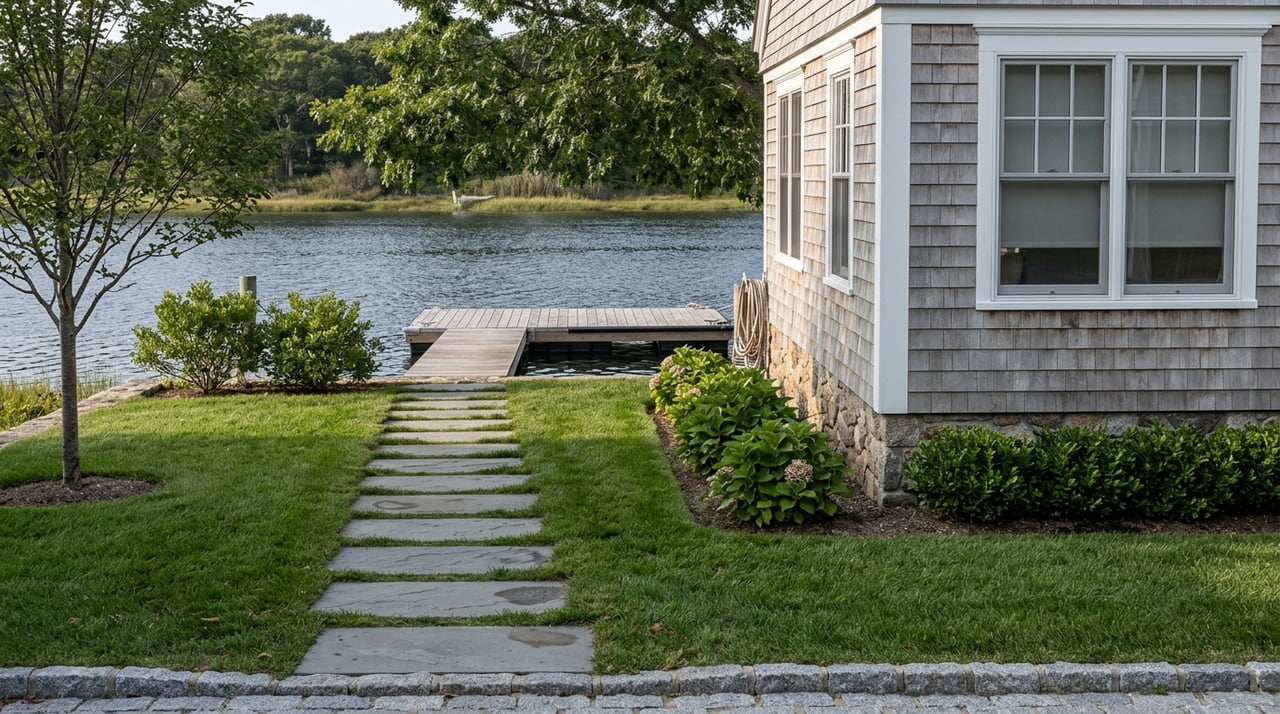
A useful rule of thumb: if a property has any water in the listing photos, a marsh view, or a walkable path to a dock, assume the shoreland ordinance applies until the code enforcement officer says otherwise.
Most sellers understand setbacks in the abstract. What surprises them is how the state treats improvements to existing structures that already sit closer to the water than current rules would allow, which describes a large portion of Kennebunk's older housing stock.
Under the Maine DEP's issue profile on the Act, a "substantial expansion" is any change that increases either the volume or floor area of a principal or accessory structure by 30 percent or more. Substantial expansions have to meet the current water setback, and a structure already closer than that setback may not be expanded toward the water at all. A porch enclosure, a second-floor bump, a garage addition, or a rebuilt deck can all trip the threshold without the owner realizing it.
This matters at listing time because the improvement that raised the home's value is often the same improvement that a code enforcement officer, or a buyer's attorney reading the file, will flag. If the work went in without a permit, that gap is now a disclosure item.
The 2024 amendment did two things that changed the calculus. First, it broadened what has to be disclosed to include alleged violations, not only adjudicated ones. Second, it gave the municipality the ability to lien the property and to withhold permits until a violation is resolved, which the Portland Press Herald's sister paper reported when the bill passed.
In practical terms, here is what the shift means for common Kennebunk situations:
| Common situation | Why it can surface as a disclosure item | Where to confirm before listing |
|---|---|---|
| Deck or screen porch added within 100 ft of the river | May exceed the 30% expansion rule or lack a shoreland permit | Kennebunk code enforcement office |
| Buffer clearing to open a water view | Cleared openings inside 75 ft of the normal high-water line are limited under state guidelines | Municipal ordinance + DEP model rule |
| Rebuilt seawall or added stone at Lords Point or Kennebunk Beach | Coastal work often triggers state or federal review on top of local permits | DEP shoreland staff and CEO jointly |
| Detached studio, sauna, or bunkhouse near a dock | Not functionally water-dependent, so it must meet the full setback | Kennebunk CEO |
| Complaint letter from a neighbor, even if no fine was issued | Now qualifies as an "alleged" violation for disclosure purposes | Written status letter from CEO |
The last row is the one that catches sellers off guard. A neighbor's complaint that sat quietly in a municipal file for two years is now a line the seller signs their name next to on the disclosure form.
The order of operations for a shoreland-adjacent listing has shifted. The photographer used to come first. The code enforcement officer does now.
The homes where this sequence pays off most are exactly the ones Kennebunk buyers pay premiums for: the shingled cottage a block from Gooch's Beach, the Landing farmhouse with a view of the tidal river, the Lower Village home a short walk from Dock Square across the bridge. The disclosure question is not a reason those homes are worth less. It is a reason the preparation is worth more.
Does the shoreland zone apply if my house is 200 feet from the river but the lot line touches the bank? Yes. The 250-foot measurement runs from the normal high-water line, not from the structure, so a portion of your lot is in the zone even if the house itself sits farther back. That matters for accessory structures, driveways, and vegetation work near the bank.
Who actually decides whether something is a violation? The Kennebunk code enforcement officer is the first authority, and Maine DEP shoreland staff provide guidance to the town. For coastal or tidal work, state and sometimes federal reviewers weigh in as well.
If I fix an unpermitted change before I list, do I still have to disclose it? Talk to a Maine real estate attorney. The 2024 amendment broadened disclosure to include alleged violations, and how a resolved matter is characterized on the form is a legal question rather than a marketing one.
Does this affect condo sellers in Lower Village and Kennebunk Landing? It can. Common elements inside the shoreland zone, like riverfront walkways, seawalls, and shared docks, fall under the same rules. The association's records become part of the pre-listing review.
If you are thinking about bringing a Kennebunk home to market this year, especially one within a walk of the river, the marsh, or the beach, the first conversation is worth having early. Betsy Coughlan, working through Legacy Properties Sotheby's International Realty, coordinates the code enforcement inquiry, the disclosure strategy, and the presentation plan as a single sequence, so that the shoreland question becomes a documented strength of the listing rather than a mid-transaction surprise.
Stay up to date on the latest real estate trends.




Experience a real estate partnership built on professionalism, clarity, and elevated service. With a refined, globally informed approach and deep local understanding, you’ll receive thoughtful guidance, seamless communication, and support tailored to your goals.